A recent update on the Centers for Disease Control and Prevention’s national measles data page indicates that one measles-related death has occurred in the United States this year. However, the agency has not disclosed the identity of the deceased or the location of the death. This information was made available on Wednesday, Sept. 23, with a notation that the figure is subject to revision.
On the same day, Pennsylvania reported a significant number of confirmed measles cases, with 835 cases identified in 39 counties, including 111 cases in the preceding week, as well as 164 hospitalizations and four deaths associated with measles, according to a report by NBC News. The discrepancy between the state’s count of four deaths and the federal count of one has not been resolved, resulting in two distinct official death tolls for residents of the state most severely affected by the outbreak.
Discrepancy in Death Toll
Families are concerned about the gap in death tolls because conflicting numbers make it challenging to assess the severity of the outbreak. However, the practical guidance provided to the public remains unchanged. The CDC has verified the death through its National Center for Health Statistics and a state report that listed measles as the underlying cause, as reported by Reuters.
A spokesperson for the Department of Health and Human Services declined to disclose the location of the death. Bloomberg News reported that the death might be one of the cases in Pennsylvania, although the CDC has not confirmed this information. The CDC’s National Center for Health Statistics has begun using mortality data for its national measles death count, rather than relying on state health departments, a change that has sparked scrutiny.
Related Post: Health and Aged Care Update Released
The Department of Health and Human Services is collaborating with the Council of State and Territorial Epidemiologists to establish a standardized definition of a measles death, enabling jurisdictions to classify and report deaths consistently. Pennsylvania, however, uses its own definition, which considers a death to be measles-associated if the individual had clinical evidence of infection, a positive lab test, and died within 30 days of symptom onset, without dying from an unrelated cause, such as a car accident, as reported by The Philadelphia Inquirer.
All four deceased individuals were unvaccinated, including two infants from Amish families in Lancaster County, an 18-year-old in Mifflin County who died from a severe neurological complication, and a 40-year-old woman in Jefferson County with severe respiratory conditions. The Lancaster County coroner has expressed doubts about the cause of one of these deaths, and HHS Secretary Robert F. Kennedy Jr. has said only one of the four resulted from measles.
If different agencies count deaths differently, it is very confusing and leads to a lack of transparency and trust, Kawsar Talaat, an associate professor at the Johns Hopkins Bloomberg School of Public Health, told Reuters.
Reason for Discrepancy
MedicalDaily previously reported that the CDC had not recorded any measles deaths in 2026, despite Pennsylvania’s count of four deaths when the state had 767 cases. Since then, the federal count has increased from zero to one, and Pennsylvania has reported an additional 68 cases. As of Sept. 17, the CDC’s national total stood at 3,471 confirmed cases, reported by 45 states, New York City, and Washington, D.C.
In 2025, three people died from measles in the United States. Lancaster County has reported 342 cases, and Mifflin County has reported 94 cases, according to The Inquirer, with physicians and local health officials suggesting that the actual count may be higher. Approximately two-thirds of Pennsylvania’s cases are among adults, and nearly all diagnosed individuals have been unvaccinated.
Read Also: Closing Stroke Prevention Gaps in Underserved Communities
The risk of measles is highest for unvaccinated individuals of any age, infants who are too young for a routine first MMR dose, pregnant people who are not immune, and individuals with weakened immune systems. Measles spreads through the air, and the virus can remain in a room for up to two hours after an infected person has left. Two doses of the measles, mumps, and rubella (MMR) vaccine are approximately 97% effective and usually provide lifelong protection.
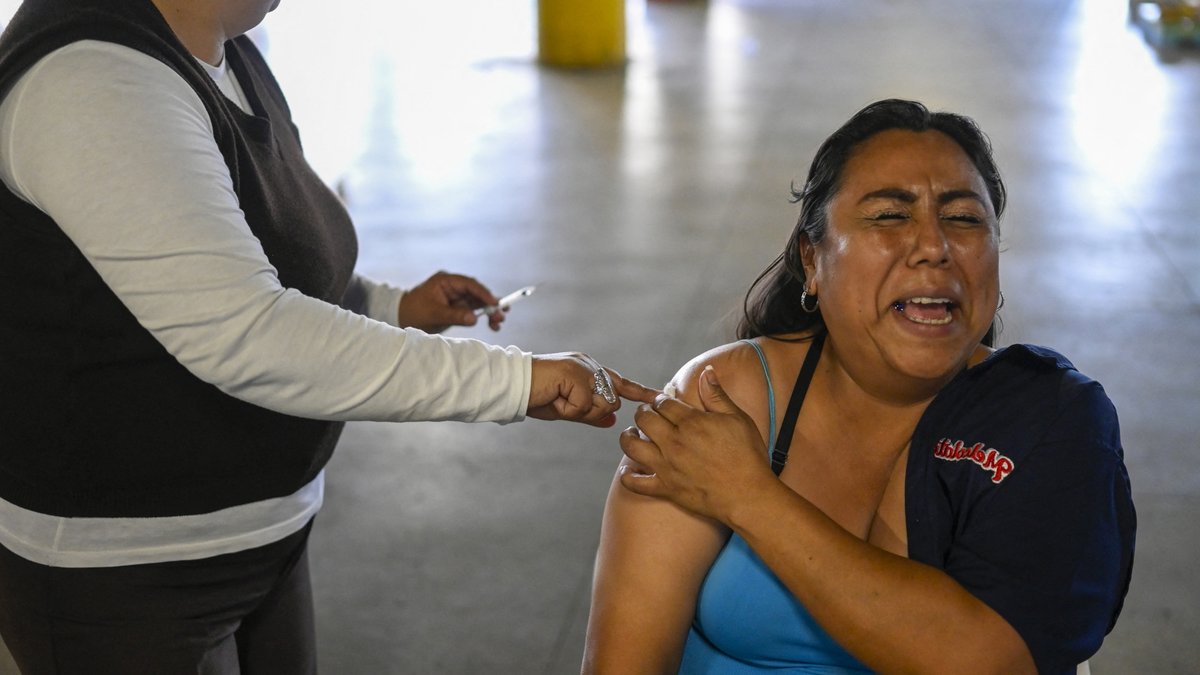
Adults with only one documented dose or no records can consult a clinician or pharmacist about vaccination. During outbreaks, infants as young as 6 months can receive an early dose. In response to the outbreak, providers administered more than 38,000 MMR doses in the first three weeks of September, compared to approximately 25,000 doses in a typical month, according to the state.
Unanswered Questions
The Pennsylvania Department of Health will offer MMR vaccines at no cost and with no insurance screening at the Bloomsburg Fair in Columbia County from Sept. 26 through Oct. 3. Individuals who receive a first dose will be provided with information on scheduling a second dose at a State Health Center. Children who qualify for the Vaccines for Children program can also receive the vaccine at no cost.
Measles symptoms typically appear 7 to 14 days after exposure but can take up to 21 days to develop. They begin with fever, cough, runny nose, and red, watery eyes, followed by a rash that starts on the face and spreads downward. Anyone who suspects measles should call a healthcare provider before arriving to prevent waiting-room exposures. Symptoms that require emergency care include trouble breathing, confusion, seizures, or signs of dehydration. Pennsylvanians can call 877-PA-HEALTH with questions about exposure.