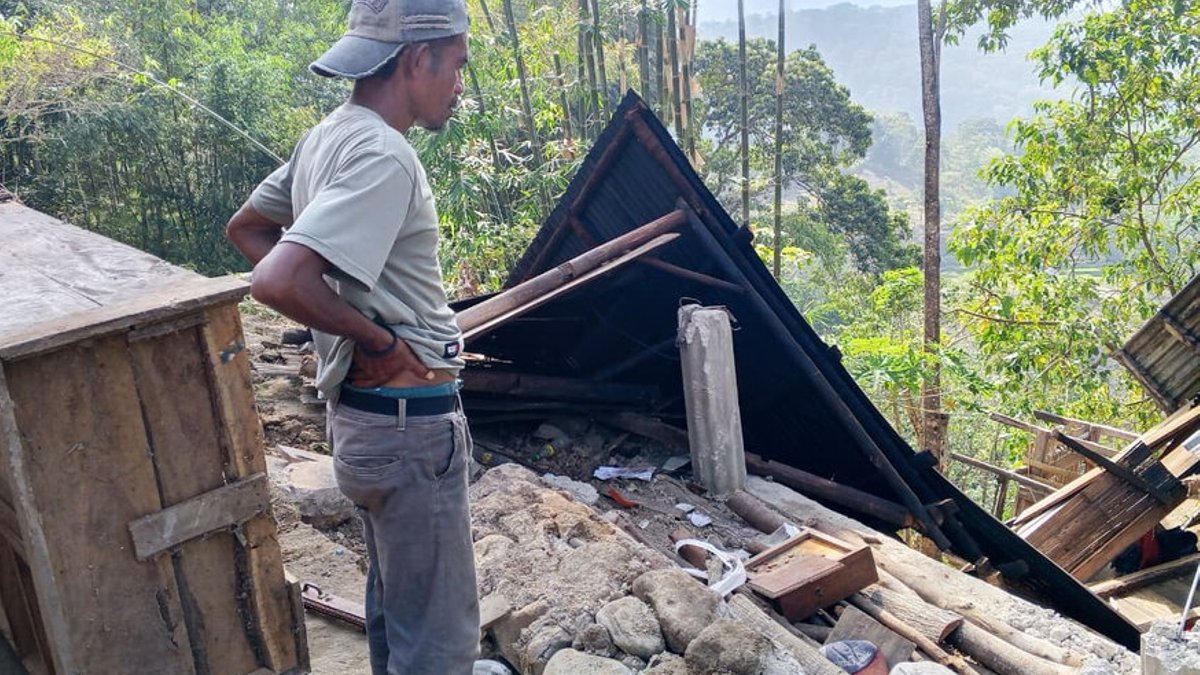
A magnitude 7.7 earthquake struck off Indonesia’s coast early Saturday, toppling buildings, killing at least five people and prompting a brief tsunami warning.
Epicenter and Immediate Impact
The U.S. Geological Survey recorded the quake at 5:58 a.m. local time, with a depth of 10 km. Its epicenter was 68 km north‑northwest of Ende in East Nusa Tenggara province, an area already familiar with strong tremors. Initial aftershocks followed the main shock, complicating rescue efforts.
Police chief Rudi Darmoko said preliminary reports show two deaths in Sikka Regency and three in Manggarai Regency. He added that power outages in towns and villages are hampering communication and slowing the flow of information.
Power outages persist.
Local television footage showed patients being evacuated from hospitals as staff moved beds, IV stands and oxygen cylinders outdoors, setting up temporary treatment areas.
Related: Mendoza throws TD in Raiders preseason loss
Damage Across Flores and Neighboring Islands
Residents across Flores island reported heavy damage. Yohanna Embu, a resident of Sikka, described collapsed structures, noting that the waiting room at the Maumere port terminal fell apart.
At St. Peter Major Seminary, the rector Rev. Guidelbertus Tanga said the roof of an assembly hall collapsed during morning Mass, forcing students and nuns to flee. “At least one priest suffered a broken leg after jumping from the second floor of a building during the quake,” he reported.
The quake also caused panic in Bima, a city in West Nusa Tenggara province, and damage was reported in parts of southern Sulawesi island.
While the shaking was felt across a broad area, the immediate concern shifted to the potential for a tsunami. Indonesia’s Meteorology, Climatology and Geophysics Agency issued a warning for coastal residents of East Nusa Tenggara, West Nusa Tenggara, South Sulawesi and Southeast Sulawesi, urging them to move to higher ground. Later, the agency lifted the warning after monitoring showed no significant sea‑level rise that would threaten coastal communities.
Authorities are now focused on assessing the full extent of the damage. “We are continuing to collect reports of damages and casualties, but there are communication disruptions,” Rudi Darmoko said.
Related: Trump Flees Turkey Under False Pretenses
In practice, the quake’s aftermath means that families in the hardest‑hit districts will likely spend days without electricity and may have to rely on makeshift shelters while officials sort through the rubble. The disruption to medical services could delay treatment for injuries that are not immediately life‑threatening, increasing the risk of complications.
Historical Context and Future Risks
Indonesia sits on the Pacific “Ring of Fire,” a zone of intense seismic activity. The country has experienced several devastating earthquakes in recent decades, including a 1992 quake that killed about 2,500 people on Flores, a 2018 magnitude 7.5 event that generated a localized tsunami and liquefaction in Palu, and the 2004 magnitude 9.1 quake off Sumatra that triggered a tsunami claiming 230,000 lives across multiple nations.
These past events highlight the difficulties faced by communities in this archipelago, where fault lines run beneath densely populated islands. Emergency response plans often hinge on rapid assessment of tsunami risk, a step that was promptly taken after Saturday’s quake.
As of the latest reports, no further casualties have been confirmed, and the tsunami warning remains lifted. Authorities continue to monitor the situation, urging residents to stay alert for possible aftershocks and to follow any new instructions from officials.