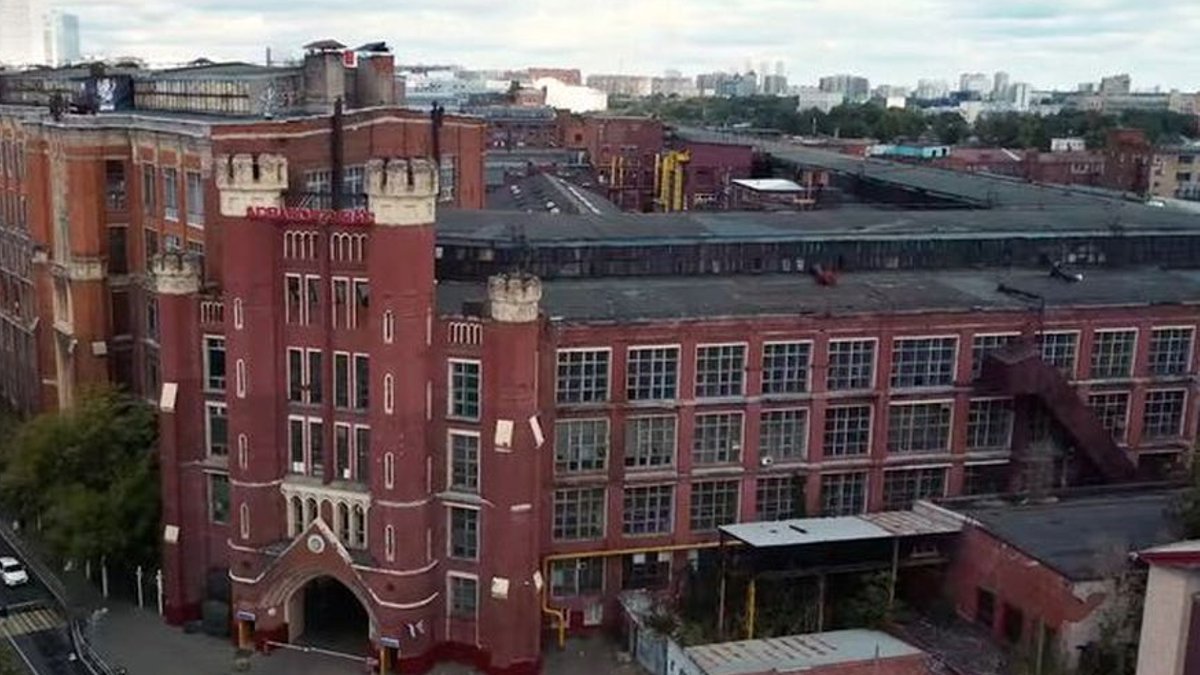
Thousands of Muscovites have rallied behind a campaign to save a Soviet-era industrial landmark from redevelopment, marking a rare public pushback against urban development in Russia.
A historic Moscow landmark
The Elektrozavod factory, a neo-Gothic structure with brickwork crenellations and colorful mosaics, has stood in eastern Moscow for more than a century. It once produced electrical devices for the Soviet Union, including lamps for the red stars on top of the Kremlin. A fire in early 2025 left the complex vacant, but its cultural and historical significance has kept it in the public eye.
“We learned about the demolition threat a year and a half ago, after the fire,” said Alya, one of the organizers behind the campaign to block high-rise construction on the site. “There’s a lot of outrage and rejection, because of these dull development projects and skyscrapers that are springing up everywhere.”
Two petitions to preserve Elektrozavod have gathered over 21,000 signatures—a notable show of support in a country where public opposition to official decisions has grown riskier. On July 24, a woman was briefly detained during a lone protest against a new bill that would allow Russian regions to strip sites of their official heritage status. The incident was reported by local news outlet Ostorozhno Novosti, though it could not be independently verified.
Both Alya and fellow campaigner Galina, who launched one of the petitions, asked to be identified only by their first names.
Related: Understanding Trump’s Proposed Board of Peace Initiative
A developer’s promise meets skepticism
Real estate firm Etalon Group told state news agency TASS last month that it planned to preserve Elektrozavod’s facades and historic features while “integrating them into a modern urban environment.” But campaigners remain unconvinced.
“It’s still unclear what their intentions really are,” said Inna Krylova, a historian specializing in industrial architecture. She emphasized the factory’s legacy, noting that 23,000 workers once labored there. “It was a city unto itself.”
The fight to save Elektrozavod reflects broader tensions over Moscow’s historic sites. Civic group Archnadzor has warned that changes to heritage laws in 2024 have weakened protections for landmarks, making it harder for activists to negotiate with developers. Krylova echoed this concern, saying the current legal framework offers fewer opportunities for dialogue with builders.
For now, the campaign continues—one of the few visible acts of civic resistance in a city where dissent is increasingly constrained.