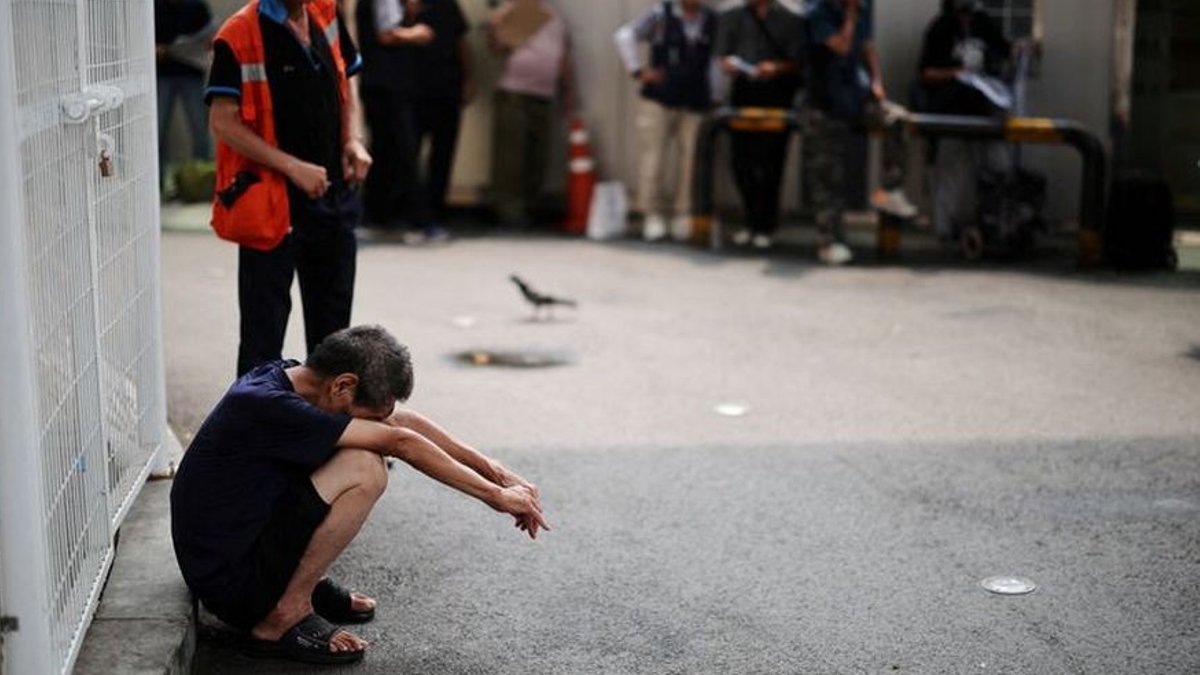
South Korea is currently enduring one of its most severe heatwaves on record, prompting President Lee Jae Myung to officially designate the extreme weather as a national disaster. The president called for urgent measures during a cabinet meeting on Tuesday, specifically directing officials to safeguard public safety as air conditioning demand spikes across the nation. This marks a significant shift in terminology, moving from standard weather alerts to a designation usually reserved for natural catastrophes.
The human cost of the soaring temperatures is mounting, with the death toll rising to 19 people. Data from the Korea Disease Control and Prevention Agency confirms that since May 15, a total of 2,025 individuals have suffered from heat-related illnesses nationwide. These numbers represent a sharp increase in strain on the country’s healthcare infrastructure and emergency services.
Historic Temperatures Recorded in Yangsan
The meteorological data paints a stark picture of the severity of the situation. On Sunday, the city of Yangsan, located in a basin in the southeastern part of the country, recorded a scorching high of 42.5 degrees Celsius (108.5 degrees Fahrenheit). This temperature is not only a daily record for the specific date but stands as the highest temperature measured in 122 years of continuous weather observation in the region.
Related: Oil rises as Asian markets see mixed trading
The Korea Meteorological Administration (KMA) responded to these conditions by issuing its first-ever heatwave warning for parts of Seoul and the surrounding Gyeonggi province on Monday. The alert was subsequently extended to cover the entire capital and its metropolitan area on Tuesday. Authorities now advise the public to halt all outdoor activities, including farming, sports, and construction work, to prevent further exposure to dangerous heat levels.
Disrupted Lives and Emergency Measures
Alongside the immediate health threats, the electrical grid is under immense pressure. With millions of South Koreans relying on air conditioning to survive the humidity, power consumption has surged to critical levels. President Lee ordered a thorough inspection of power systems to ensure the infrastructure can handle the load without failing during the hottest hours of the day.
The reliance on a “national disaster” label for a weather event is a relatively new development for many nations, often signaling a failure of conventional emergency management frameworks. In the past, heatwaves were viewed as seasonal inconveniences, whereas the current situation suggests a threshold has been crossed where standard protocols are insufficient. This shift indicates that infrastructure, particularly in densely populated urban basins like Yangsan, is unprepared for the frequency of these extreme temperature spikes. The proposed redesign of the disaster response system is not merely an administrative update but a necessary adaptation to a new climatic reality where traditional risk assessments no longer apply.
The effects of the heat are already visible on the ground, particularly in areas with limited resources. In the Yeongdeungpo district of western Seoul, residents like Son Ki-young have expressed deep concern for those unable to escape the heat. “I feel sorry to see homeless people who are suffering from the heat on the street,” Son said, highlighting the disparity in who can access relief during a crisis.
Related: Moscow rally backs Soviet-era factory rescue
Cho Sang-yeon, a resident of a jjokbang village—a complex of cheaper single-room housing in the same district—described the experience as unprecedented. Having lived in the area for nearly 20 years, Cho stated, “I have never felt heat like this so far here.” The lack of proper ventilation in these older structures makes them particularly dangerous when outside temperatures hit triple digits.
Firefighters and other officials are actively working to mitigate the immediate dangers in these neighborhoods. Jun Hong-cheol, an official at the Yeongdeungpo Fire Station, reported that teams have been deployed to spray water on hot roads and check on residents showing signs of heatstroke. This grassroots effort is essential given the limitations of the national response system during peak heat events.
The disruption extends beyond just public health. The extreme heat has forced cancellations of daily life events, most notably sports. The Korea Baseball Organization cancelled two games scheduled for Tuesday, one in Seoul and another in Gwangju. This decision reflects the difficulty of maintaining normal schedules when the environment becomes hazardous for both participants and spectators.