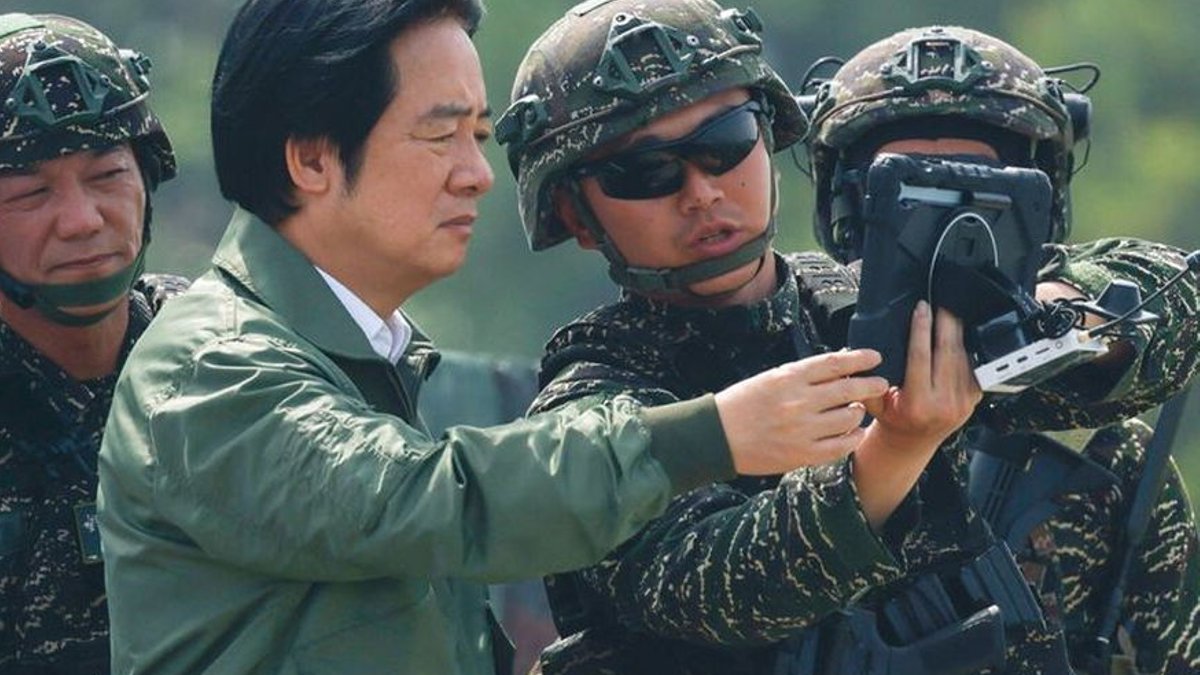
Taiwan President Lai Ching‑te personally oversaw coastal strike drills on Saturday as part of the island’s annual Han Kuang war games, boarding a fast‑attack missile boat and observing low‑flying attack drones in a simulated response to a possible Chinese assault.
President’s Direct Involvement Highlights Training Focus
The drills began on Wednesday and are set to run for ten days, concentrating on combat readiness against a potential invasion by China. Lai boarded a missile boat at a navy base in Kaohsiung, a southern port city, and delivered a broadcast message to the sailors taking part. “The purpose of the Han Kuang exercise is to use live troops, live terrain and live equipment to test command coordination, combat responsiveness and homeland defence capabilities,” he said.
He added that the government would keep strengthening defence capabilities in the face of “external threats and challenges,” pledging continued support for both the military and the Coast Guard. The president’s remarks did not name China directly, but the context makes clear the drills are aimed at deterring Beijing’s longstanding claim over the island.
Related: Sydney Towle Cancer Documentarian Dies at 26
During the exercise, small, low‑flying attack drones swarmed over the beach and sea, mimicking the kind of aerial threat that could be deployed in a real conflict. The drones demonstrate the growing importance of unmanned systems in naval warfare.
Coast Guard Assets Integrated Into Naval Operations
One of the newly commissioned Anping‑class catamarans from the Coast Guard also took part in the drills. These vessels are based on the navy’s Tuo Chiang fast‑attack warships, which the Taiwanese military has labeled “aircraft carrier killer” because of their heavy anti‑ship missile load.
Earlier in the week, Lai observed missile launchers being installed on an Anping‑class ship, signaling the Coast Guard’s readiness to support naval operations if war breaks out. The integration of Coast Guard vessels reflects a broader strategy to expand the island’s defensive depth by using all available maritime resources.
Related: Tennessee primary tests new map splitting Memphis
While the drills focus on tactical proficiency, they also serve a political purpose. China regards Lai as a “separatist” and has dismissed his repeated offers of dialogue, reinforcing the island’s need to demonstrate a credible deterrent.
The exercise may push Taiwan to refine its joint‑force command structures, especially as the Coast Guard’s role blurs with that of the navy. The ability to coordinate missile launches from a catamaran alongside traditional warships could become a decisive factor if tensions rise. This hybrid capability, though still in early stages, could reshape how Taiwan allocates its limited defense budget.
Officials said the Han Kuang exercises will conclude next week, after which a debrief will assess performance and identify any gaps in readiness. The outcome could influence future procurement decisions, particularly regarding unmanned aerial systems and missile‑armed patrol vessels.