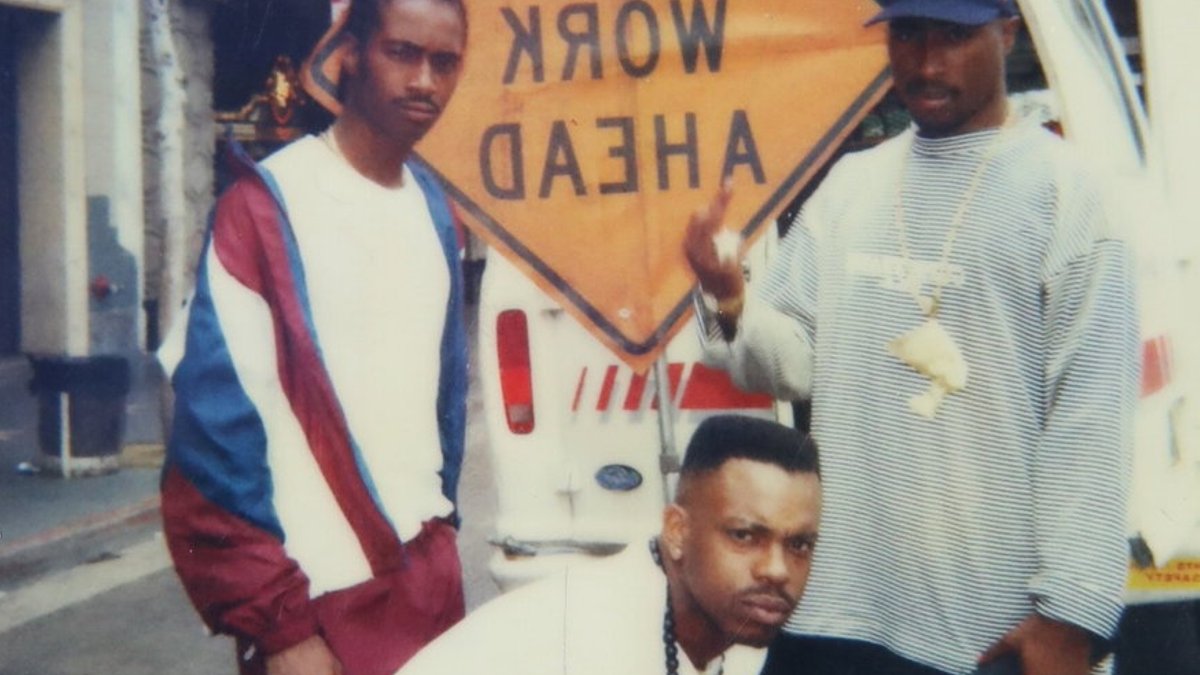
Nearly 30 years after Tupac Shakur was killed in a Las Vegas drive-by shooting, the man prosecutors accuse of orchestrating the murder will stand trial.
Duane “Keffe D” Davis, 63, faces a single count of murder with a deadly weapon. Authorities say he acted to promote or assist a criminal gang in Shakur’s death. Davis has pleaded not guilty and has been in custody since late 2023.
Decades of silence, then a memoir
The case remained unsolved for years until Davis began discussing his role as a leader of the South Side Compton Crips. In 2019, he released a memoir, Compton Street Legend, outlining his involvement in the shooting. The book and subsequent interviews revived the investigation.
Prosecutors claim Davis was in the white Cadillac that pulled alongside Shakur’s BMW on September 7, 1996. They say he supplied the gun used in the attack. No one has been charged with firing the weapon, and Davis is among the last surviving witnesses from that night.
Related: South Korea declares heatwave national disaster, 19 dead
His legal team argues there is no proof he ordered the shooting. They contend the state’s case depends on witnesses who were not present and that Davis left the drug trade in 2009, later working a regular job until illness forced his retirement in 2014.
A feud that spilled into music
The shooting was not an isolated incident. Grand jury transcripts describe it as the peak of a long-standing rivalry between Death Row Records and Bad Boy Records, along with their linked gangs, Mob Piru and South Side Compton Crips.
Shakur, Snoop Dogg, and Dr. Dre were associated with Death Row, while Bad Boy, founded by Sean “Diddy” Combs, included The Notorious B.I.G. The gangs clashed repeatedly, both before and after Shakur’s death.
The violence that night may have been retaliation. Earlier, Shakur and his group had assaulted Davis’ nephew, Orlando “Baby Lane” Anderson, at the MGM Grand.
The trial is expected to last about a month but may not resolve every detail. Prosecutors are concentrating on Davis’ role as the planner, not the shooter. His memoir and a 2008 police interview will be key evidence, though his attorneys failed to block their use in court.
Related: Understanding Trump’s Proposed Board of Peace Initiative
Closure for some, uncertainty for others
For Shakur’s family, the trial is difficult but necessary. His stepbrother, Maurice “Mopreme” Shakur, described the last three decades as “exhausting and stressful.” Attending the proceedings will be painful, he said, but he remains “cautiously optimistic” justice will be served.
“I hope the trial is fair, and we learn the truth,” he said.
Shakur’s impact endures. He’s considered one of the most influential rappers of all time with songs that speak to the human experience of love, heartache and familial relationships.
Davis’ trial won’t alter that legacy. For a case that has lingered for decades, it may provide some resolution—or at least a legal conclusion.