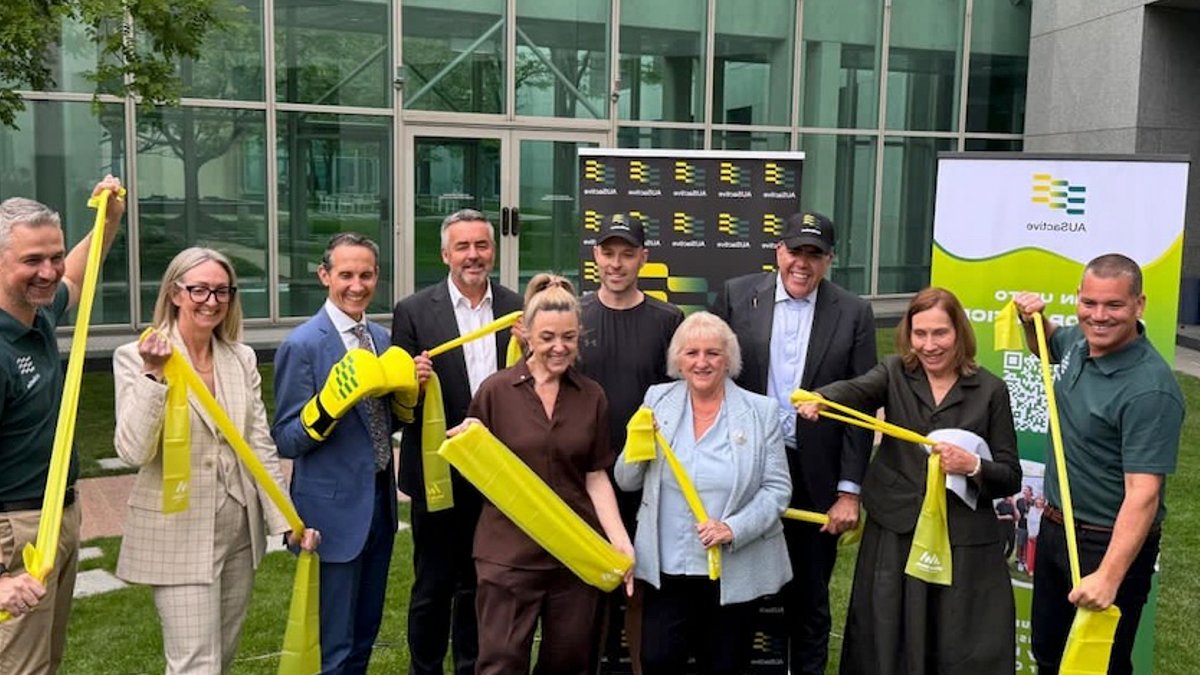
The Million Moves campaign kicks off on 1 September, a free national challenge to encourage Australians to incorporate movement into everyday life. Ken Griffin, CEO of AUSactive, the peak body for Australia’s exercise and active health sector, reviews the compelling health grounds for supporting Australians to become more physically active.
AUSactive is currently seeking feedback on its whitepaper ‘From clinical advice to community action’, which proposes a formal connection between the health system and exercise and active health sector to increase physical activity across Australia and better integrate exercise into preventative healthcare.
Physical activity should be embedded within preventive health, primary care, chronic disease management, mental health and healthy ageing strategies, Griffin says. The conditions influencing movement are shaped by transport, urban planning, education, employment, healthcare and social policy, so responsibility cannot rest solely with individuals.
Related: Right to bear witness under attack
The Australian Institute of Health and Welfare’s Australia’s Health 2026 report presents a confronting picture. Three in five Australians live with at least one chronic condition, while an ageing population and growing demand for care are placing sustained pressure on individuals, communities and health services.
Prevention must become a central organising principle if Australia is to improve health outcomes while maintaining a sustainable health system. Physical activity should be part of that shift.
Research gives us an increasingly clear picture of the benefits generated by physical activity.
Australians are aware of the benefits of movement. The challenge is converting knowledge into action. People may not know where to begin. Some feel intimidated by conventional fitness messaging or environments.
Related: Trump Says Mideast Allies Near Iran Deal, US to Stop Strikes
Public health initiatives must make movement feel accessible, achievable and relevant to everyday life. That is the thinking behind Million Moves. Australians are invited to participate in a free national movement challenge.
The concept is deliberately simple: one minute of movement equals one move. Participants can walk, swim, cycle, garden, dance, stretch, undertake resistance training, use active transport, play with their children or engage in any activity that gets them moving. Every move counts. Million Moves is not about sporting achievement or physical perfection.
Australia must address the systems and environments that shape people’s opportunities to be active. That means designing communities that support walking, cycling, active recreation and social connection. It means investing in accessible movement opportunities for people of different ages, abilities, cultures, incomes and locations.
Related: Patient Consent Faces New AI Challenges in Healthcare
They propose a formal connection between the health system and exercise and active health sector to increase physical activity across Australia and better integrate exercise into preventative healthcare. AUSactive is seeking feedback on its whitepaper.
Readers can take two practical actions this September. First, join Million Moves and encourage patients, colleagues, students, teams, families and communities to participate. Second, provide feedback on the AUSactive whitepaper and help identify the policy, system and community changes needed to make movement easier and more equitable across Australia.
Physical activity improves health. It reduces healthcare costs. It strengthens communities. The challenge now is turning that evidence into sustained action. Australia’s inactivity problem will not be solved by one campaign, one organisation or one policy. But meaningful change can begin with something simple. It can begin with one move.